Common Student Pilot Struggles
Every student begins flight training with different expectations and learning styles. Some students pick up flying quickly, while others take more time to develop the necessary skills. That is completely normal. Learning to fly is a process, and mistakes are a natural part of that process.
Mistakes themselves are not the problem. The real concern is failing to learn from them. A pilot’s ability to recognize an error and correct it is what builds skill and confidence in the cockpit. Below are some common challenges student pilots experience during training.
Holding the Controls Too Tightly
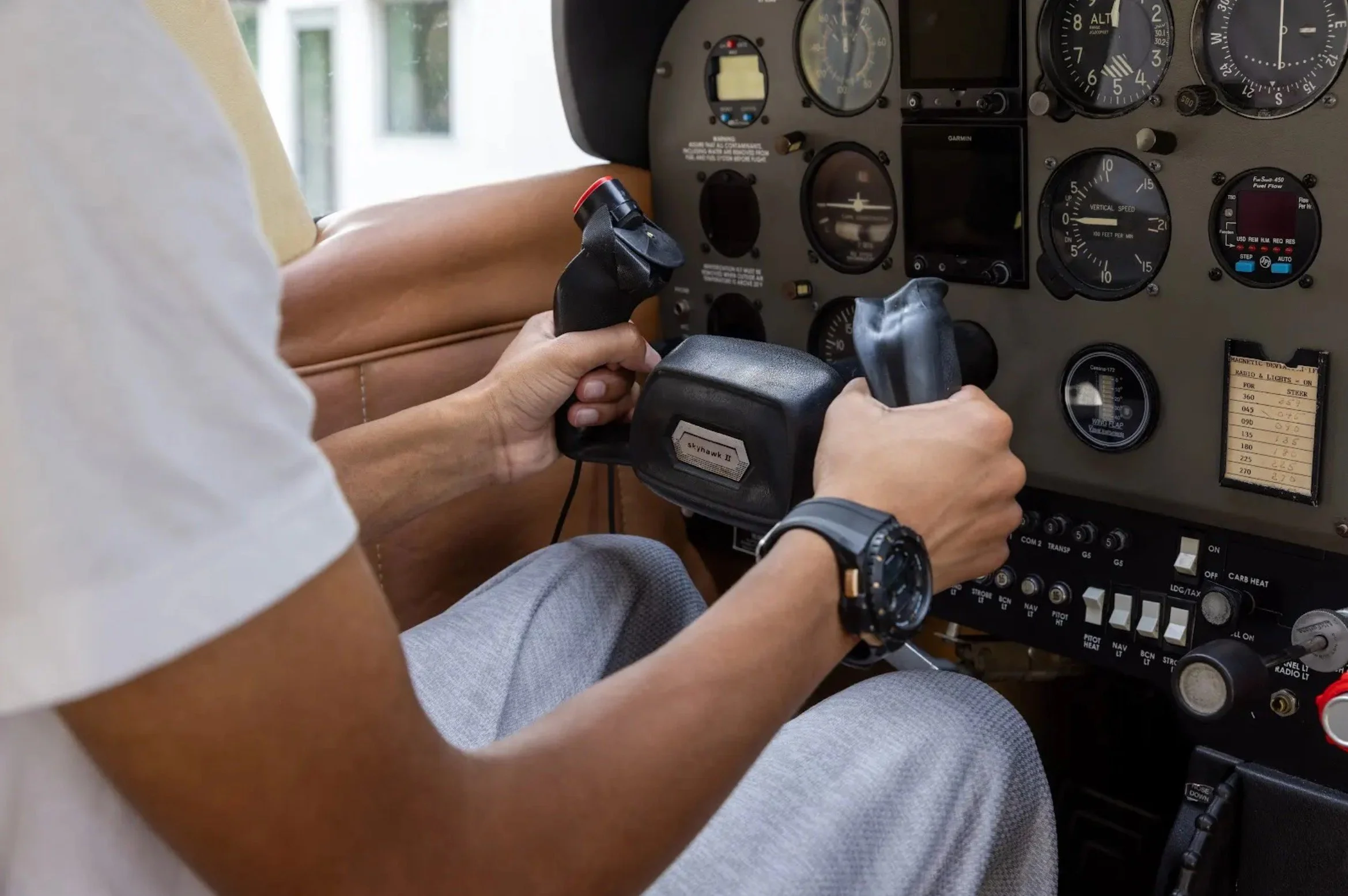
Many new students grip the controls too firmly when they begin training, whether from nerves or from trying too hard to control the airplane. A tight grip makes it harder to feel how the airplane responds to small control inputs and changing air currents. This often leads to overcontrolling, where the pilot makes large corrections for small changes in pitch or bank.
Aircraft are designed to be stable, and most adjustments only require small and smooth control inputs. Learning to relax your grip helps you feel the airplane and make more precise corrections.
Landing
Landing is one of the most challenging parts of flight training. When the approach is unstable or inconsistent, the landing itself becomes much harder to manage.
During training, students learn to configure the airplane at specific points in the traffic pattern. For example, flaps are typically added gradually as the aircraft moves from downwind to base and then to final.
Inconsistent approaches make it difficult to judge when to begin the flare or how the airplane will respond close to the runway.
Maintaining a consistent and stabilized approach is the key to improving landings. Following the same configuration and procedure in the traffic pattern helps create predictable approaches and smoother touchdowns. Learning to transition through the level off before the flare also helps control the descent and manage airspeed properly.
Mental Blocks
At some point during training, many students experience moments where they know what to do but struggle to recall the information in the cockpit.
This often appears when a student becomes frustrated or overly focused on a previous mistake. Attention shifts away from flying the airplane and toward the mistake itself, which can lead to additional errors and more frustration.
The best way to reduce these moments is preparation and repetition. Reviewing procedures before each lesson and focusing on the next task instead of past mistakes helps keep your attention where it belongs. With experience, these mental blocks become less common.

Situational Awareness
Managing everything happening during a flight can feel overwhelming at first. Student pilots must control the aircraft while also tracking their position, altitude, traffic, weather, and other factors.
A lack of situational awareness often shows up when a pilot becomes focused on one task and loses track of something else that is happening around the airplane. This can lead to missed radio calls, altitude deviations, or confusion about position.
Improving situational awareness comes from learning to prioritize tasks and stay ahead of the airplane. Thinking a few steps ahead and regularly scanning instruments and the outside environment helps build this skill over time.
Looking Inside Too Much
Another common habit among new pilots is relying too much on the instrument panel instead of looking outside of the airplane.
When flying in visual conditions, the primary reference for controlling the airplane should be the horizon and outside visual cues. Pilots are also responsible for watching for other aircraft, which makes it essential to spend most of their time looking outside. Instruments should only be checked briefly before returning attention outside the cockpit.
Radio Communication
Radio communication can feel intimidating when students first begin flying. Even when they understand the proper phraseology, speaking on the radio while flying the airplane can be challenging.
The best way to improve is through practice. Listening to air traffic communications and mentally rehearsing responses can help students become more comfortable. Before pressing the microphone it helps to clearly think about who you are calling, who you are, where you are, and what you need.
Rudder Use
Proper use of the rudder is another skill that takes time to develop, especially during landing.
Some students try to stay aligned with the runway by moving the ailerons back and forth. This often leads to overcorrection and unstable approaches. Instead, small rudder inputs should be used to keep the aircraft aligned with the runway while adjusting bank into the wind to correct for drift. When done properly the airplane touches down aligned with the runway centerline and without sideways stress on the landing gear.
Learning Through Experience
Every pilot makes mistakes while learning to fly. These challenges are a normal part of the training process. With practice, preparation, and guidance from a flight instructor, student pilots gradually develop the skills and confidence needed to fly safely and consistently.